Islands & Destinations
7 min read
Guna Yala (Kuna Yala), Panama: A Guide to the Guna Territory and Its Islands
Guna Yala, also called Kuna Yala or San Blas, is the Guna people's autonomous territory in Panama: 300+ islands, molas, a cash entry fee and how to visit.

Boris
Captain, Nomad Sailors
·

Guna Yala, Panama — also known as the San Blas Islands — is far more than a tropical destination. It is a living, autonomous Indigenous territory where culture, tradition, and identity remain at the center of everyday life.
Located along Panama’s Caribbean coast, Guna Yala includes hundreds of small islands surrounded by coral reefs. While many visitors come for the scenery, what truly defines this region is its people.
You may also see the name written as Kuna Yala, but both refer to the same place. Today, “Guna Yala” is the official term, meaning “Land of the Guna.”
If you’re planning to visit the Guna Yala islands, understanding the culture behind the destination will completely change how you experience it.
Guna Yala at a glance
Official name | Comarca Guna Yala (formerly Kuna Yala); “San Blas” is the name used in tourism |
Where | The Caribbean coast of northeastern Panama, toward the border with Colombia |
Islands | Over 300 islands and cays; only a small number are inhabited |
People and language | The Guna people; Dulegaya, with Spanish used especially in tourism |
Status | An autonomous Indigenous territory where Guna authorities control access, transport and accommodation |
Entry fee | USD 20–22 per foreign visitor and USD 5 for residents and nationals, in cash with your passport at the checkpoint on the road from Panama City, plus a port tax of USD 2–5 per person |
Getting there | About 4 to 5 hours from Panama City by 4×4 and boat, or a 40–45 minute private flight from Albrook Airport (PAC). There are no commercial flights. |
Money | Cash only: there are no ATMs on the islands and no card payments at the checkpoint |
Key Takeaways
Guna Yala, Panama is an autonomous Indigenous territory known for its rich culture and beautiful islands.
The Guna people maintain their traditions while managing tourism and land use to protect their identity.
Visitors experience low-impact tourism, such as sailing and cultural immersion, rather than large resorts.
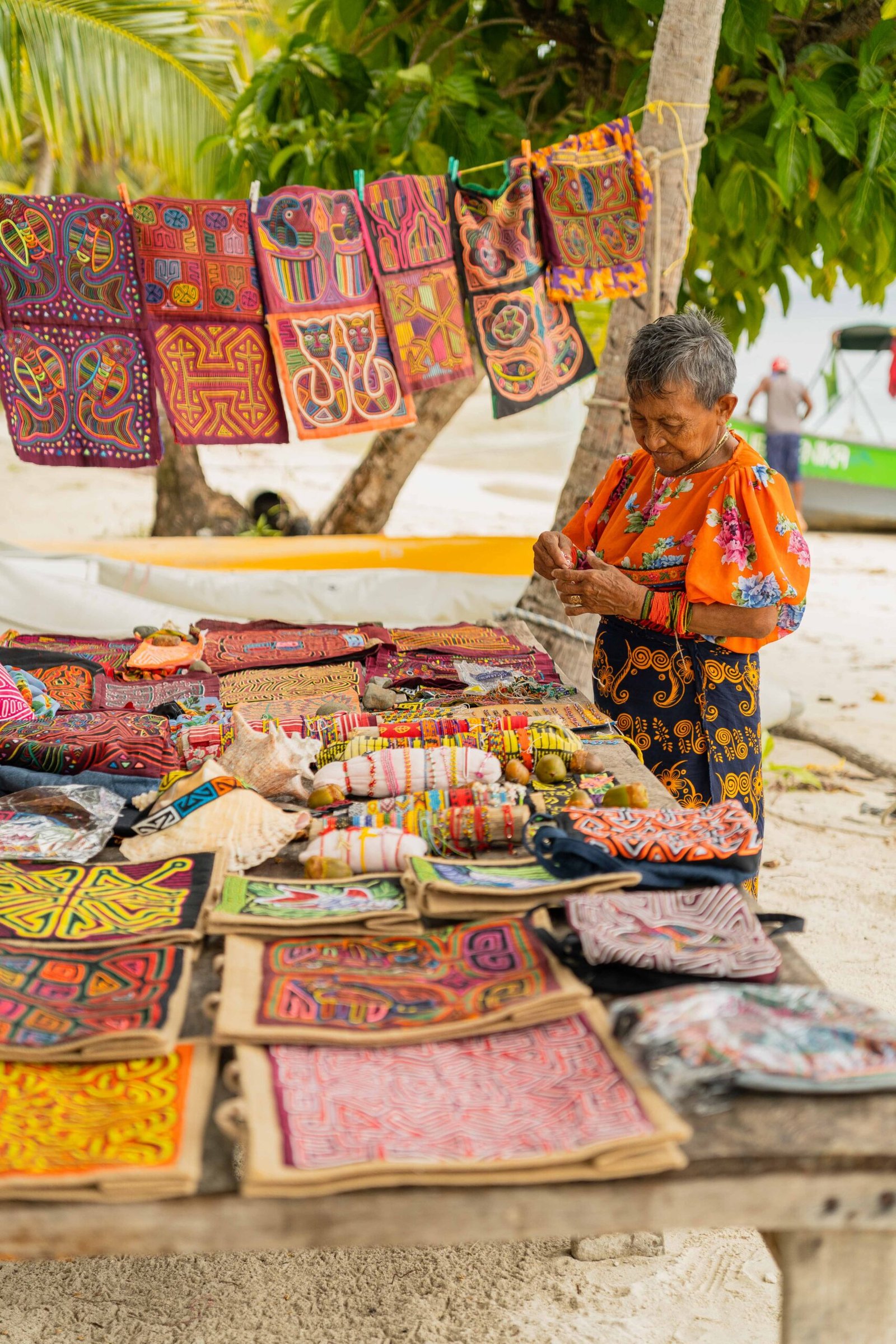
Molas, handmade textile panels, symbolize Guna identity and can be purchased from local artisans.
Travelers must respect community guidelines and plan their visits around fixed transportation schedules.
What is Guna Yala (Kuna Yala)?
Guna Yala is an autonomous Indigenous region in Panama, officially recognized as a comarca indígena. It is governed by the Guna people, who have maintained political and cultural independence for generations.
This autonomy shapes how everything works across Guna Yala, Panama — from tourism to land use and daily life.
The territory includes:
A narrow strip of mainland jungle
Guna Yala archipelago (over 300 islands)
Coastal and marine ecosystems
Only a small number of these Guna Yala islands are inhabited, and many communities continue to live in a traditional way, closely connected to nature.
When you visit Guna Yala, you’re not just going to a beach destination — you’re entering a protected cultural territory.
Where is Guna Yala in Panama?
Guna Yala is located on the northeastern Caribbean coast of Panama, near the border with Colombia.
The region stretches along the coastline and includes both mainland jungle and the famous Guna Yala islands. On a map, you’ll often see it referred to as the San Blas archipelago.
Most visitors travel from Panama City to Guna Yala, which involves a 4×4 journey followed by a boat transfer to the islands. Its remote location is one of the reasons why Guna Yala remains so untouched compared to other destinations in Panama.
The Guna People and Their Way of Life
The Guna Yala people are one of the most recognized Indigenous groups in Central America, known for preserving their traditions while adapting to modern realities.
Community life in the Guna Yala comarca is deeply structured and based on collective decision-making. Each village has its own leaders, and important matters are discussed in community gatherings.
Daily life revolves around:
Fishing
Coconut harvesting
Small-scale trade
Traditional crafts
The ocean plays a central role in Guna Yala culture — not only as a source of food, but also as a means of transportation and connection between islands.
Unlike many modern destinations, development in Guna Yala is intentionally limited. There are no large resorts or mass tourism projects, which helps preserve both the environment and the cultural identity of the region.
Guna Yala Culture and Traditions
One of the most unique aspects of Guna Yala in Panama is how visible and active its culture is. Traditions are not performed for tourism, they are part of everyday life.
Molas: A Symbol of Guna Identity
Molas are one of the most iconic elements of Guna Yala culture.
These handmade textile panels are created using a reverse appliqué technique and are traditionally worn by Guna women. Today, they are also sold as crafts across the Guna Yala islands.
Each mola represents a story or symbol, often inspired by:
Nature
Animals
Geometric patterns
Cultural beliefs
Buying molas directly from local artisans is one of the best ways to support the Guna Yala community.
Language and Cultural Identity
The Guna people have their own language, Dulegaya, which is still widely spoken throughout Guna Yala, Panama.
While Spanish is also used, especially in tourism, the preservation of their native language is a key part of their identity.
This strong cultural presence is one of the reasons why visiting Guna Yala feels so different from other destinations.
Traditional Clothing
Traditional dress remains an important part of daily life in Guna Yala.
Guna women typically wear:
Colorful patterned skirts
Molas as part of their blouses
Beaded bracelets and leg adornments
Headscarves
These are not costumes — they are expressions of identity and culture that you’ll see every day across the Guna Yala islands.
The Guna Yala Islands
These islands are part of the larger Guna Yala archipelago, one of the most stunning coastal regions in Panama.
With over 300 islands, this area is known for:
White sand beaches
Crystal-clear, shallow waters
Palm-covered landscapes
Vibrant marine life
Some islands, like Pelican Island (often linked to Money Heist), have gained international attention, but most remain quiet and untouched.
Unlike other Caribbean destinations, there are:
No large resorts
No mass tourism infrastructure
No overdevelopment
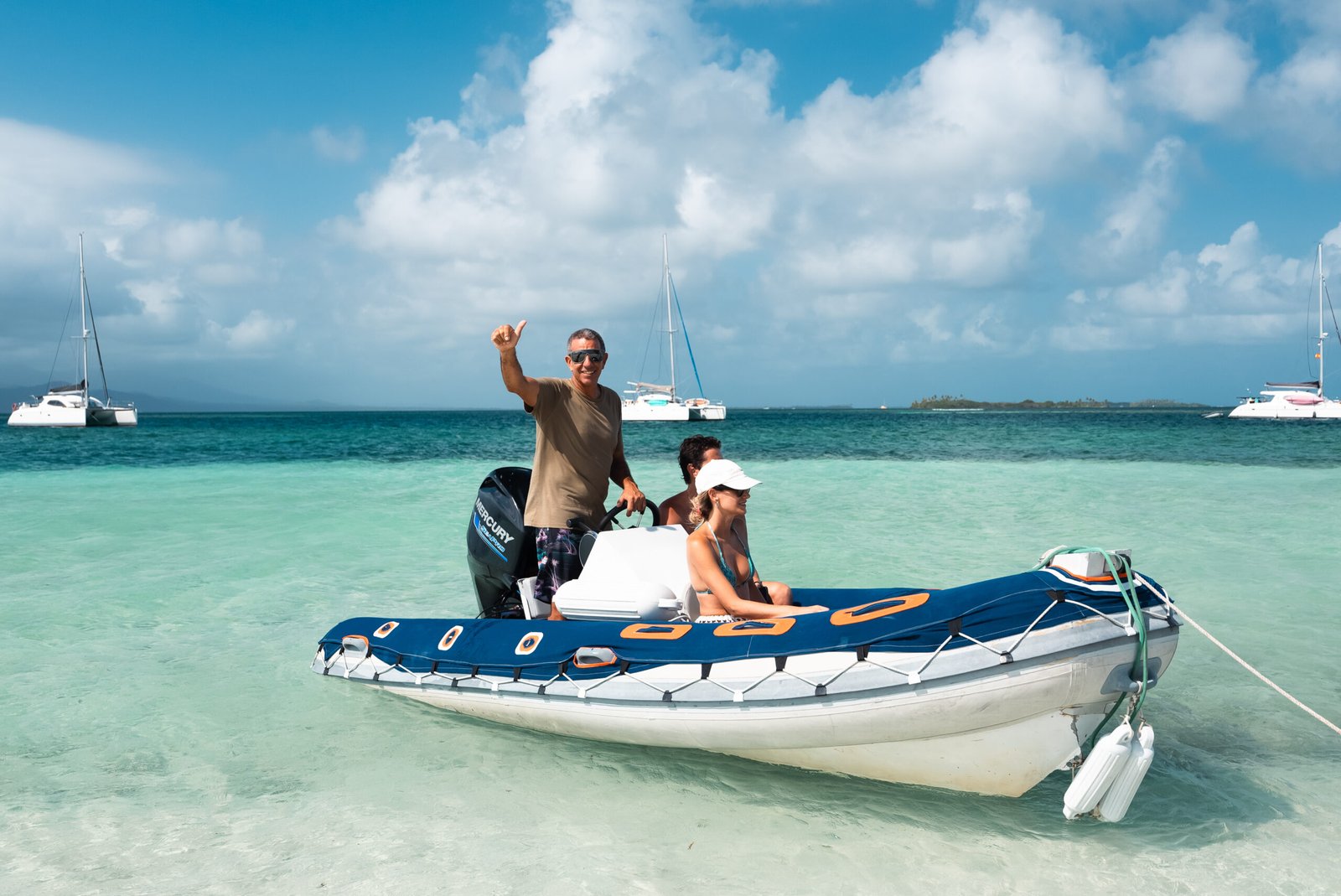
Instead, most Guna Yala tours focus on:
Sailing experiences
Island hopping
Cultural immersion
Guna Yala Tourism: Rules, Access, and What to Expect
Tourism in Guna Yala Panama is carefully regulated to protect both the environment and the Guna culture.
Because this is an autonomous territory, access is controlled by local authorities. This applies to:
Transportation
Accommodation
Guna Yala travel services
You won’t find traditional Guna Yala hotels or large resorts. Instead, experiences are designed to be low-impact and community-focused.
Many visitors explore the Guna Yala archipelago through:
Sailing trips
Small island stays
Locally operated tours
This approach ensures that tourism benefits local communities while preserving the natural beauty of the region.
Important Travel Tips for Visiting Guna Yala
Respect the Community
Guna Yala is an autonomous Indigenous territory. Always follow local rules and respect community guidelines.
Plan Around Fixed Transport Schedules
Transportation in Guna Yala operates on limited daily schedules between the mainland and the islands.
Boat transfers and 4×4 connections typically run at specific times, so it’s important to plan your arrival and departure in advance — especially when organizing your Guna Yala trip from Panama City.
You can learn more in our guide on how to get to San Blas Islands from Panama City.
Ask Before Taking Photos
Always ask permission before taking photos of people in Guna Yala communities.
Why Guna Yala is Worth Visiting
Guna Yala is about experiencing a way of life that has remained deeply connected to tradition for generations.
Beyond the landscapes, what makes Guna Yala Panama special is:
Its strong cultural identity
Its community-based tourism model
Its connection to nature
If you’re looking for something more than a typical Caribbean destination, Guna Yala offers a truly unique experience.
Planning Your Visit to Guna Yala
If you’re planning a trip to Guna Yala Panama, understanding the culture is just as important as organizing logistics.
Many travelers choose to explore the Guna Yala islands by boat, as it allows access to remote areas and a more complete experience of the archipelago.
If you have questions about routes, transportation, or how to plan your trip, you can contact us through our website or via WhatsApp. We’re always happy to help you experience Guna Yala the right way.
Guna Yala: Frequently Asked Questions
Where is Guna Yala in Panama?
Guna Yala is located on the Caribbean coast of Panama, near Colombia. It includes the mainland region and the Guna Yala archipelago.
Is Guna Yala and San Blas the same?
Yes. San Blas is the common name used in tourism, while Guna Yala or Kuna Yala in Panama is the official name of the region.
Is it Guna Yala or Kuna Yala?
Both terms refer to the same region in Panama. Kuna Yala is the older spelling, while Guna Yala is the officially recognized and updated name used today.
How do you get to Guna Yala from Panama City?
Most people travel from Panama City to Guna Yala by 4×4 vehicle followed by a boat transfer. Flights to Guna Yala are also available from Albrook Airport.
Are there hotels in Guna Yala?
There are no traditional hotels in Guna Yala. Accommodation includes cabins, eco-lodges, and sailing boats across the Guna Yala islands.
What are the Guna Yala islands known for?
The Guna Yala islands are known for their natural beauty, clear waters, and strong Indigenous culture.
What is a mola in Guna Yala?
A mola is a traditional handmade textile created by Guna women and one of the most important cultural symbols of Guna Yala.
How much is the Guna Yala entrance fee?
USD 20–22 per foreign visitor and USD 5 for residents and nationals, paid in cash with your original passport at the checkpoint on the road from Panama City. A port tax of USD 2–5 per person is paid at the dock. Our guide to the cash costs of San Blas has the full breakdown.
Can you visit Guna Yala on a day trip?
You can, but it is a long day: more than seven hours of travel for about four hours on one of the busy day-trip islands. Staying at least one night, on an island or aboard a boat, lets you see the archipelago after the day-trip boats have gone. Read our honest take on San Blas day trips.
What is the best time to visit Guna Yala?
There is no bad time. Mid-December to April is the dry season, with steady wind and sun for sailing; May to mid-December is calmer and quieter, with flat turquoise water. See the best time to visit San Blas.
Is San Blas safe to visit?
San Blas is a remote, community-run territory rather than a resort area, and most visitors travel with a licensed operator. Sailing and water activities carry their own risks, so follow your captain’s decisions on weather, sea conditions and where to swim, respect the rules of each Guna community, and keep your passport and cash with you.
Do you need a passport to visit San Blas?
Yes. Foreign visitors show their original passport and pay the entry fee in cash at the Guna Yala checkpoint on the road from Panama City, so bring the original with you.
How many islands are there in San Blas?
More than 300 islands and cays, often quoted as 365. Only a small number are inhabited; most are small islands of sand and palms. Our map of the San Blas Islands shows how they group together.
Written by Boris
Captain and founder of Nomad Sailors
Hey, I’m Boris — captain, traveler, and the heart behind Nomad Sailors. I built this project to share what the sea taught me: simplicity, connection, and the joy of living wild and free.
Keep reading